What the Recruitment Industry Just Told Us - and Why You Should Be Paying Attention
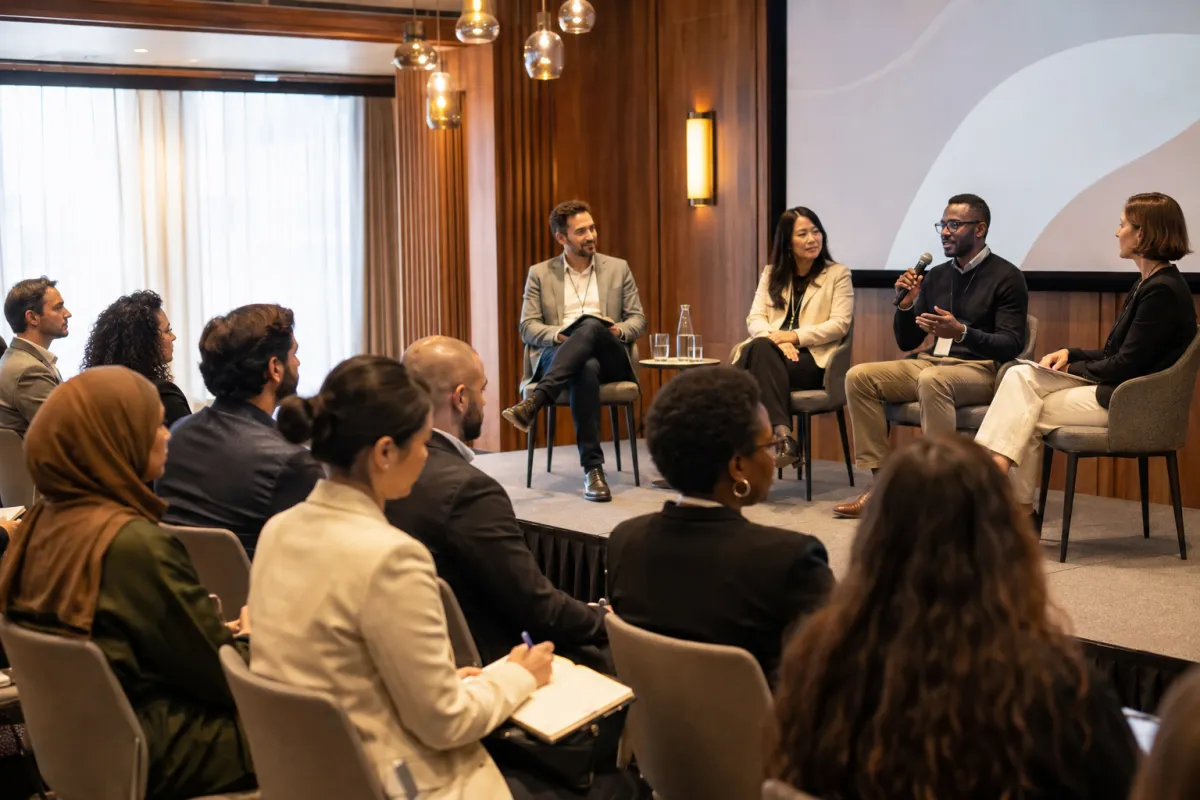
Let me be upfront: I'm not a recruiter. I'm a human performance strategist, a Master Trainer of NLP, the co-author of the book ‘The Talent Alchemist’ and a founding member of a predictive hiring intelligence platform. When I walk into a room full of recruitment professionals, I'm not there to talk shop about Boolean searches or candidate pipelines. I'm there to listen to what the market is actually experiencing, because the signals that surface at events like TalentX are the same ones that shape how every organisation hires, retains, and leads people. Including yours.
What I heard was more urgent than I expected.
1. The Jobs Aren't Disappearing. They're Shapeshifting.
The headline that gets written about AI and employment is almost always wrong. It's either ‘AI will destroy millions of jobs’ or ‘the AI threat is overblown.’ SEEK's Director of AI Product, Carolyn Bennett, brought actual platform data to the stage, and the truth is more nuanced than either narrative.
Overall job volume hasn't collapsed. But churn within those jobs has exploded. The same role title, say, a marketing manager or a business analyst, requires meaningfully different skills today than it did three years ago. The target is moving faster than most organisations can aim.
The data from a ThinkerTank study presented on stage added another layer. Workers don't stay for money alone (though pay and rewards still topped the list at 27%). Working for good leaders came in at 18%, with wellbeing and flexible working each at 17%. And yet most hiring processes assess none of these things, neither in the candidate being evaluated, nor in the leaders they'll report to.
“The same role title, the same job description, but the skills inside that role have shifted. You're matching into a moving target.”
SEEK Director of AI Product, TalentX 2026
The implication for every organisation, not just recruitment agencies, is this: if the skills landscape is shifting this fast, then hiring based on past performance, CV screening, or intuition is becoming increasingly unreliable. What worked in 2021 does not predict what will work in 2027.
2. AI Is Making Recruitment Faster. That's the Problem.
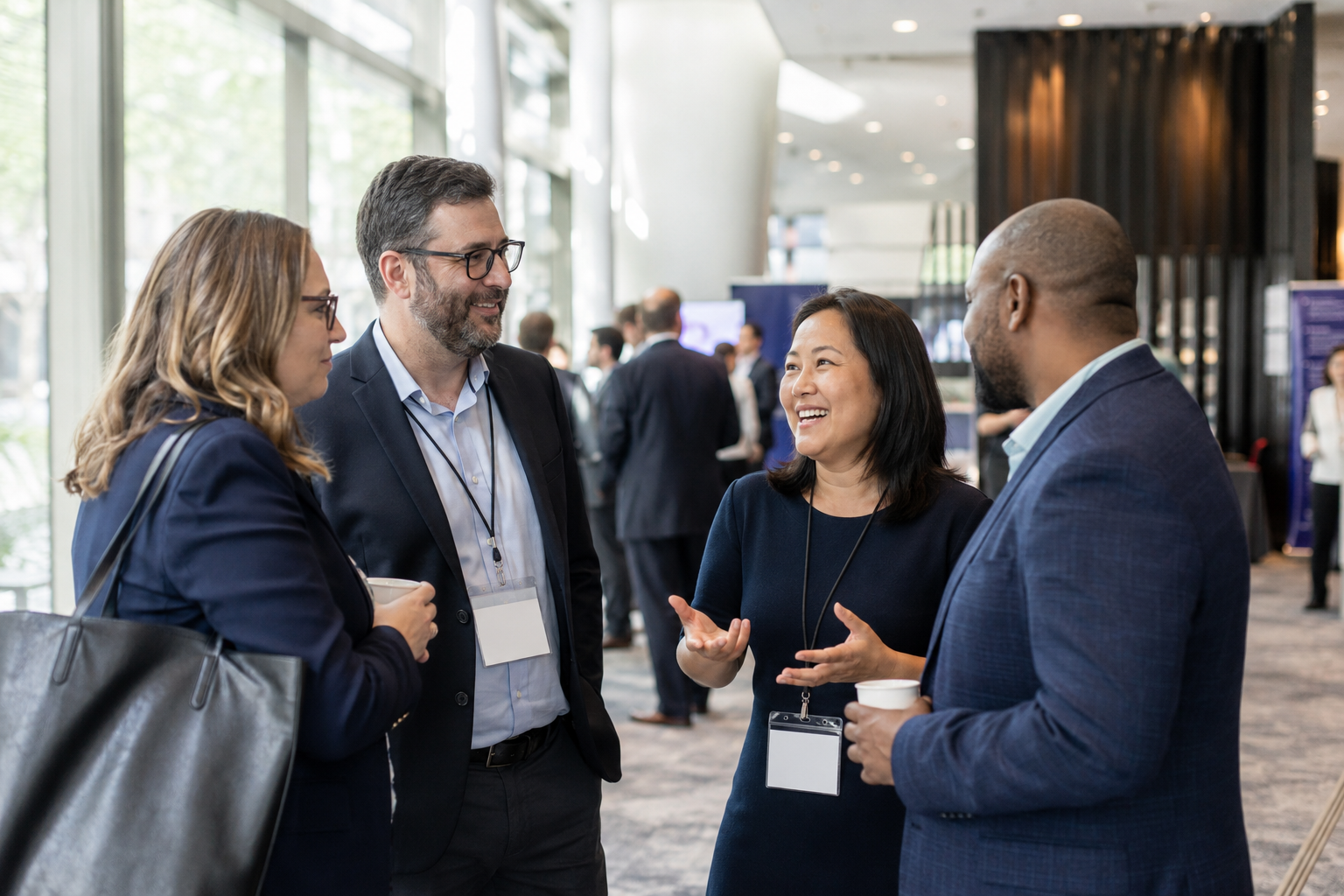
Here's the conversation I had on the floor of TalentX, more than once, with different people: “AI is incredible. We can source candidates so much faster now. We can process applications, rank CVs, reach out at scale.”
And then, almost always: ‘But how do we actually know we're hiring the right person?’
Speed is not the same as accuracy. When every agency is using the same AI tools to find candidates faster, speed becomes a commodity. The agencies that will win, the organisations that will build great teams, are the ones that can answer the question that AI-powered screening doesn't: Is this person actually right for this role, this team, and this culture?
One conversation on the floor stopped me mid-step. A recruitment technology founder put it simply: “AI is going to be completely commoditised. The cut-through is going to come from the human part, the testing, the behavioural understanding.”
He was right. And that window is open right now, before every platform claims to do it.
3. The Good Candidates Are Already Gone By the Time You Decide.
This one landed differently because it confirmed something we've been saying since the beginning of Atumaphire.
Most hiring processes are too slow for the best candidates. By the time a strong applicant has moved through a standard process, CV screen, first interview, psychometric assessment sent as a separate step, second interview, reference check, offer, they've already accepted something else. The best people aren't waiting.
Speed matters not because volume matters, but because talent has options. And the irony is that the AI tools designed to speed up sourcing haven't solved the real bottleneck: making a confident, accurate, rapid decision about fit.
Here's what that looks like in contrast:
Standard process: Days to weeks between each stage, with assessment often treated as a late-stage formality.
Predictive intelligence approach: Behavioural and psychometric insight embedded from the first meaningful interaction, so decisions can be made with confidence, earlier.
The result: You don't just hire faster. You hire with more certainty, which reduces the mis-hire cost that most organisations are quietly carrying.
4. Generations Aren’t the Problem. Leadership Is.
The intergenerational panel at TalentX was one of the most honest conversations I’ve sat near at a conference in years, Gen X, Gen Y, and Gen Z professionals talking about what actually drives performance across generational lines, and what gets in the way.
The insight that stayed with me: every generation thinks the problem is the one above or below them. Gen X thinks Gen Z is entitled. Gen Z thinks Gen X is a digital Luddite. The reality, as one of the panellists put it, is that the generation gap is really a leadership gap.
People who are promoted into leadership because they were great at their previous role, not because they're actually equipped to lead, are the source of most of what we're calling generational friction. The data backs this up: 18% of workers across all generations said working for good leaders was their primary reason for staying in a role. That's the second-highest motivator after pay, and the one organisations have the most actual control over.
“Care about the person first. Really get to know your people, understand what makes them tick, and hopefully you can work towards a common goal.”
Gen Y Panellist,TalentX 2026
The implication for every organisation, not just recruitment agencies, is this: if the skills landscape is shifting this fast, then hiring based on past performance, CV screening, or intuition is becoming increasingly unreliable. What worked in 2021 does not predict what will work in 2027.

5. AI Resistance Is Not About Technology Literacy.
I had a fascinating exchange with a recruitment technology founder about why some people, including younger generations, are resistant to AI adoption. His 21-year-old son refuses to use AI on environmental grounds. Others in the room were resistant because the tools feel unfamiliar. Others still, because they can see their industry being disrupted and that disruption feels personal and threatening.
What struck me is how often organisations try to solve AI resistance with training. “They just need to learn how to use it.” But the resistance is rarely about capability. It’s about meaning, identity, and fear. What does it mean for my role if AI can do this? What happens to the creative work I trained for? Is this system ethical?
These are not technical questions. Understanding the motivational filters of your team members, what drives them, what they move away from, what they need to feel safe, tells you far more about their AI adoption trajectory than a digital skills assessment ever could. Some people will run toward AI because they see possibility. Others will drag their feet because they see threat. Both responses are rational. Both require different approaches to lead through change.
So, What Does This Mean If You're Not a Recruiter?
Everything above applies to you.
Every organisation that hires people is navigating the same landscape. The recruitment industry just happens to be at the sharpest edge of it. They feel the consequences of a bad hire immediately and viscerally. Most other industries absorb the cost quietly, in underperformance, turnover, and culture decay, without ever tracing it back to the hiring decision.
Here's what TalentX confirmed for us:
The era of hiring on gut feel and CV pattern-matching is ending. The organisations that replace it with behavioural intelligence will build better teams, faster.
Generic AI tools will be everywhere within 18 months. The differentiator will be what you layer on top, the human intelligence, the psychometric depth, the predictive accuracy.
Leadership development cannot be separated from talent acquisition. The profile of your leaders determines who you can attract, retain, and develop. These are not separate problems.
Generational complexity is not going away, but it is navigable when you understand what each person actually needs, not what you assume their generation wants.
What Atumaphire is Building
Atumaphire exists because the tools to answer these questions already exist, in NLP, in psychometrics, in decades of behavioural research, but they've never been unified into something that works at the speed and scale of modern hiring. That's the problem we're solving. Not replacing the human in the loop. Equipping the human in the loop to make better decisions, faster, with more certainty.
The recruitment industry gathered at TalentX this year and collectively said: we know AI changes the game, we're not quite sure how, and we desperately need a new layer of intelligence that makes us better at the part that matters most, understanding people.
That's not just a recruitment story. That's yours too.