The Resume Is the Most Misleading Document in Business
Why the Resume Fails as a Hiring Tool
For decades, the resume has been the centerpiece of hiring.
Employers request it. Recruiters filter by it. Applicant tracking systems scan it. Hiring managers review it before deciding who to interview.
In most organisations, the resume is treated as the primary source of information about a candidate.
Yet despite its central role in recruitment, the resume is one of the least reliable predictors of future performance.
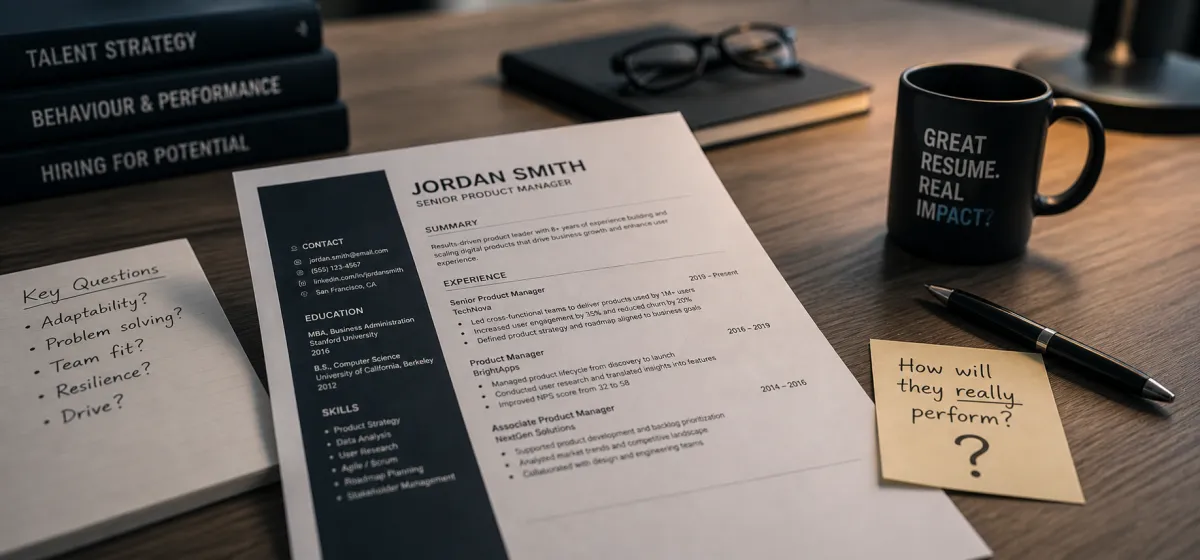
Because a resume is not an objective record of capability. It is a marketing document.
And like all marketing documents, its purpose is not to provide perfect clarity. Its purpose is to create the best possible impression.
What a Resume Actually Tells You
A resume can certainly provide useful context about a candidate. It tells you where someone has worked, the roles they have held, the responsibilities they claim to have managed, and the achievements they have chosen to highlight.
In essence, a resume presents a curated story of someone’s professional history.
But that story is shaped by a single objective: to secure an interview.
Candidates naturally emphasise their successes, simplify complex situations, and frame their experiences in ways that make them appear more capable, more experienced, and more aligned with the role they are applying for.
This is not deception. It is simply human nature.
When people are competing for opportunities, they present themselves in the strongest possible light.
The problem arises when hiring systems treat this document as a reliable indicator of future performance. Because the resume was never designed to predict performance.
What a Resume Cannot Tell You
The most important factors that determine success in a role are often invisible within a resume.
A resume cannot tell you how someone thinks. It cannot reveal how they approach complex problems or how quickly they make decisions when faced with uncertainty. It does not show how they behave when pressure increases or when priorities shift.
It cannot tell you how they collaborate with others, how they handle disagreement, or how resilient they are when projects become difficult.
Most importantly, a resume cannot tell you whether someone will naturally thrive in your organisation’s environment.
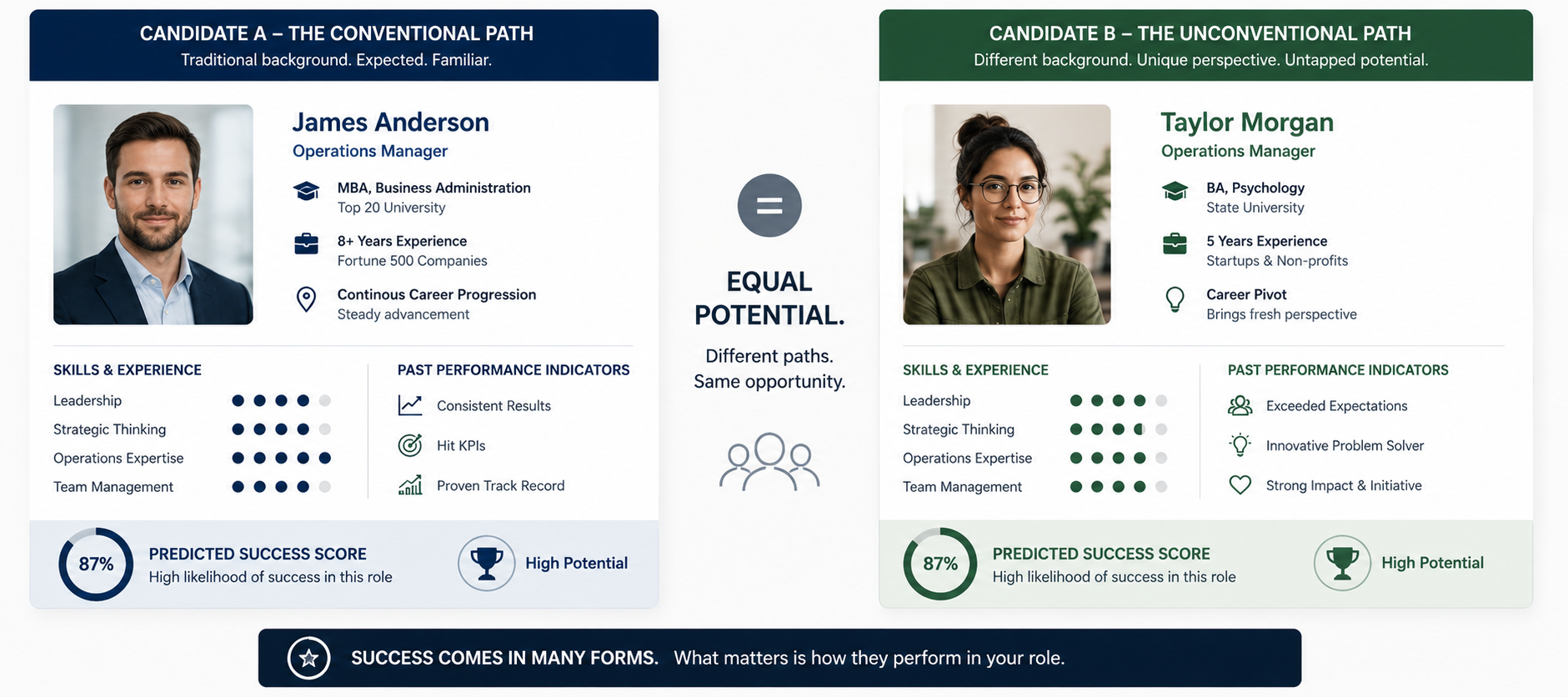
Two candidates may present equally impressive resumes, yet one may flourish in the role while the other struggles from the first week. The difference is rarely found in their job history. It lies in their behavioural style, motivation, and alignment with the role itself.
The Illusion of Similar Experience
Hiring managers often gravitate toward candidates whose resumes closely resemble the role they are trying to fill.
Someone who has worked in the same industry, held the same title, and performed similar tasks appears to be a logical choice. On paper, the transition seems straightforward.
But similarity of experience does not guarantee similarity of performance.
A candidate who has done the job before may still struggle if the pace of the environment is different, if the culture requires a different communication style, or if the decision-making demands are unfamiliar.
Meanwhile, someone from a completely different industry may possess exactly the behavioural strengths needed to excel in the role. They may process information faster, handle pressure more effectively, and naturally adopt the working style required by the position.
Yet because their resume does not follow the expected pattern, they are often overlooked.
This is how organisations unintentionally reject individuals who might have become exceptional performers.
The Missing Dimension in Hiring
When hiring decisions rely primarily on resumes, organisations are evaluating only one dimension of a candidate: their professional history.
But success in a role is determined by far more than past experience. It depends on factors such as how someone naturally approaches problems, how they interact with colleagues and customers, how they respond to pressure and ambiguity, how motivated they are by the challenges of the role, and how closely their behavioural style aligns with the work itself.
These factors cannot be captured in bullet points on a resume. They require a deeper understanding of the individual.
A Better Way to Understand Candidates
At Atumaphire, we believe that real hiring intelligence comes from looking beyond resumes and examining the deeper signals that shape human performance.
Instead of relying on history alone, organisations should evaluate candidates using a broader set of insights:
- Behavioural profiles that reveal how someone naturally thinks, communicates, and approaches work
- Performance signals that highlight patterns of achievement and capability across different environments
- Work-style alignment that shows whether the candidate’s natural way of working matches the demands of the role
- Authenticity analysis that helps distinguish genuine experience from polished narratives
When these signals are combined, hiring decisions become far more informed and far more predictive. Instead of guessing how someone might perform, organisations can begin to see how closely a candidate’s natural strengths align with the role they are stepping into.
Moving Beyond the Resume
Resumes will likely remain part of the hiring process for many years. They provide context and help tell the story of someone’s career.
But they should never be mistaken for a reliable measure of future success.
The most important qualities that determine whether someone will excel in a role are rarely found in a document. They are found in the deeper patterns of behaviour, motivation, and capability that shape how individuals perform in the real world.
When organisations learn to look beyond the resume, they unlock a far richer understanding of talent.
And that is when hiring begins to transform from a process of reviewing documents into a process of discovering true potential.