
From Human Resources to Human Potential
The Evolution of a Critical Business Function
For decades, the Human Resources function has played a vital role inside organisations.
HR departments manage recruitment processes, handle compliance and employment regulations, oversee policies, and support employee relations. They ensure that organisations operate smoothly from a people management perspective.
These responsibilities remain essential.
But something fundamental is changing. The expectations placed on HR are evolving.
Organisations are beginning to recognise that the HR function can contribute far more than administration and compliance. It can become the science of unlocking human potential inside organisations.
This transformation is shifting HR from a support function into one of the most strategic capabilities in modern business.
The Traditional Role of HR
Historically, the HR function focused on several core responsibilities: recruiting and onboarding employees, managing employment contracts and policies, ensuring legal compliance with labour regulations, and handling performance reviews and disciplinary processes.
These tasks were essential to maintaining stability and fairness within organisations. But they also meant that HR was often viewed primarily as an administrative function - the department responsible for policies, procedures, and people-related processes.
While necessary, this perspective limited HR’s ability to influence the deeper dynamics that shape organisational performance.
A Changing Business Environment
The modern workplace is far more complex than it was even a decade ago.
Organisations face rapid technological change, global competition, evolving workforce expectations, and increasing demand for innovation.
In this environment, success depends heavily on how effectively organisations harness the capabilities of their people.
Leaders are beginning to realise that talent is not simply a resource to be managed. It is a potential advantage to be cultivated.
This shift in perspective is driving the evolution of HR from Human Resources to Human Potential.
Beyond Managing People
Managing people ensures that organisations function properly. Unlocking human potential ensures that organisations perform exceptionally.
This difference is subtle but profound.
Managing people focuses on processes such as recruitment, training, and performance reviews.
Unlocking potential focuses on deeper questions: How can individuals contribute their strongest capabilities? Where will people thrive inside the organisation? How can teams be designed to combine complementary strengths? How can leadership styles align with the needs of different teams?
Answering these questions requires a deeper understanding of human behaviour inside organisations. This is where modern HR is evolving into a more analytical and strategic discipline.
The Rise of People Intelligence
Just as finance evolved from bookkeeping into financial analytics, people management is evolving into people intelligence.
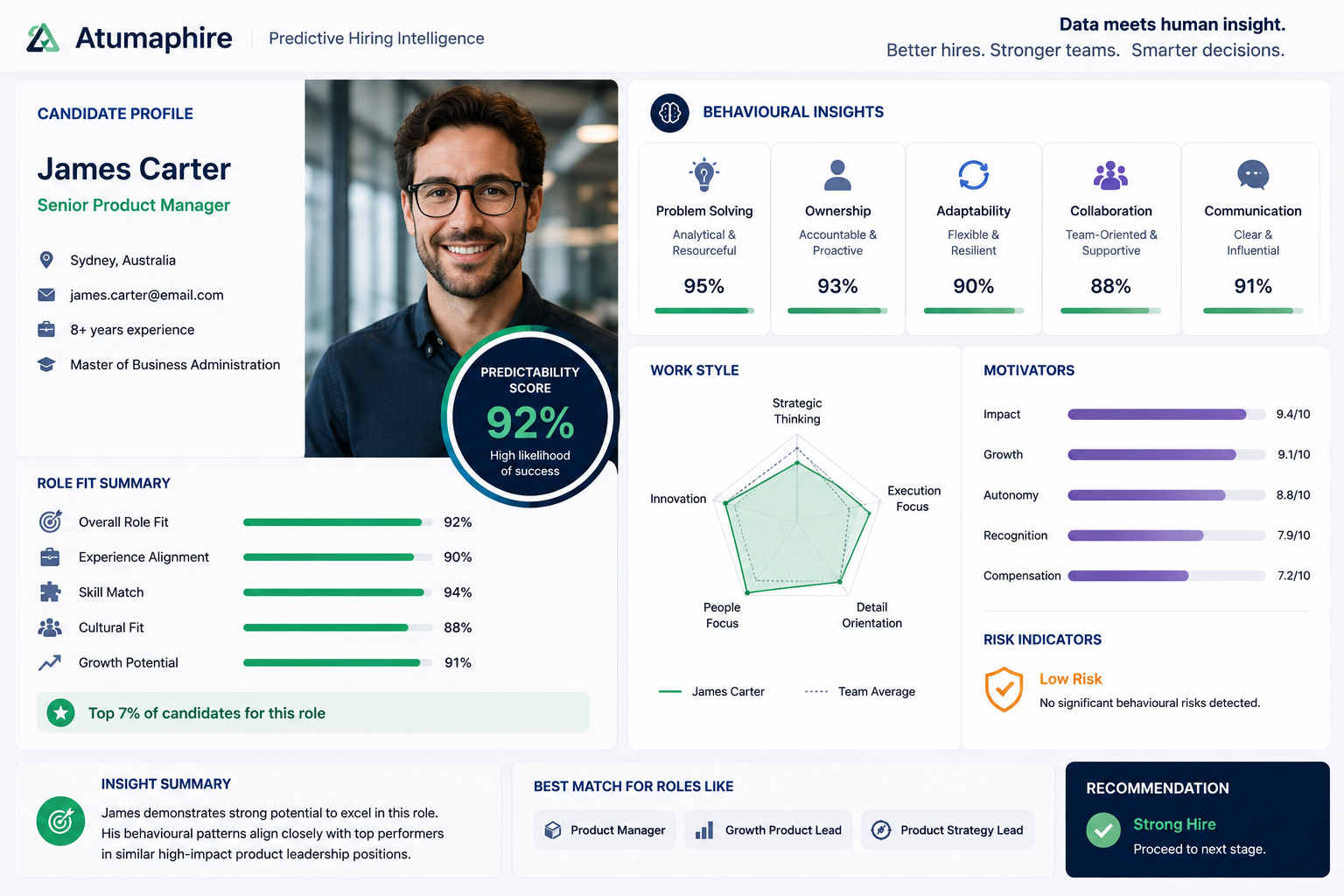
Organisations are beginning to use data, behavioural analysis, and psychometric insights to better understand how individuals perform and interact.
This new layer of intelligence allows leaders to move beyond assumptions about talent. Instead of relying solely on resumes, job titles, or past experiences, organisations can examine deeper indicators of how individuals naturally think, work, and collaborate.
These insights reveal patterns that traditional HR processes cannot easily detect. They show where people’s strengths lie and how those strengths can be aligned with roles, teams, and leadership structures.
Designing Organisations Where People Thrive
When leaders gain insight into behavioural patterns and cognitive styles, they gain the ability to design organisations more intentionally.
Roles can be structured around the strengths required for success. Teams can be composed of individuals whose capabilities complement one another. Leadership approaches can be adapted to match the needs of different groups.
This approach transforms the workplace from a system where employees simply fill positions into one where individuals operate in environments that allow them to perform at their best.
The result is greater engagement, stronger collaboration, and higher levels of sustainable performance.
The Atumaphire Approach
At Atumaphire, we believe that understanding human behaviour is the key to unlocking the full potential of organisations.
Through behavioural profiling and psychometric analysis, leaders gain deeper visibility into how individuals approach work, communication, and problem solving.
These insights allow organisations to move beyond managing people toward actively designing environments where individuals can thrive.
Psychometric intelligence helps leaders answer critical questions: Which roles align best with an individual’s strengths? How should teams be structured to balance different capabilities? What leadership approaches will support different personality profiles?
When these insights become part of leadership decision-making, organisations gain a powerful advantage. They begin to operate not just as systems of tasks and processes, but as systems designed to amplify human potential.
The Future of HR
The future of HR is not about eliminating administrative responsibilities. Compliance, policies, and recruitment will always remain important.
But the role of HR is expanding.
The function is becoming a strategic partner in shaping how organisations discover, develop, and deploy talent.
In this new model, HR leaders become architects of human potential. They help organisations understand their people at a deeper level. They guide leaders in building teams where strengths complement one another. They help create environments where individuals are able to perform at their highest level.
A New Mandate for Leadership
The organisations that succeed in the coming decade will not simply be those with the best strategies or technologies. They will be the organisations that understand how to unlock the full potential of their people.
This requires a shift in thinking.
Employees are not just resources to be managed. They are individuals with unique capabilities waiting to be discovered and aligned with the right opportunities.
When organisations embrace this perspective, HR evolves into something far more powerful. It becomes the discipline that helps leaders answer one of the most important questions in modern business:
How do we design an organisation where people can truly thrive?